
How to Raise Independent Eaters
One of the most rewarding milestones in parenting is watching your child confidently feed themselves.
While self-feeding can sometimes feel messy, slow, and frustrating, it's an important part of helping children develop independence, confidence, and a healthy relationship with food. The good news? A few simple changes can make the process easier for both you and your child.
Why Independent Eating Matters
When children are encouraged to feed themselves, they're doing much more than simply eating a meal. They're developing:
Fine motor skills and hand-eye coordination
Confidence and self-esteem
Decision-making skills
Awareness of hunger and fullness cues
A positive relationship with food
Allowing children to take an active role at mealtimes helps them learn to trust their bodies and become more capable eaters over time.
Create a Child-Friendly Mealtime Environment
Children are more likely to eat independently when they have the right tools.
Choose plates, bowls, and cups that are lightweight, easy to hold for little hands. When children can comfortably carry and use their own dinnerware, they feel more confident and capable at the table.
A calm, welcoming environment also helps. Sitting together as a family whenever possible allows children to observe and learn from others while making mealtimes feel enjoyable rather than pressured.
Create a Calmer Mealtime Environment
The dinnerware you use can have a bigger impact on mealtimes than you might think.
Many children's plates are covered in bright colours, busy patterns, and cartoon characters that can compete for attention at the table. For some children, especially picky eaters, a simpler plate can help keep the focus on the food itself.
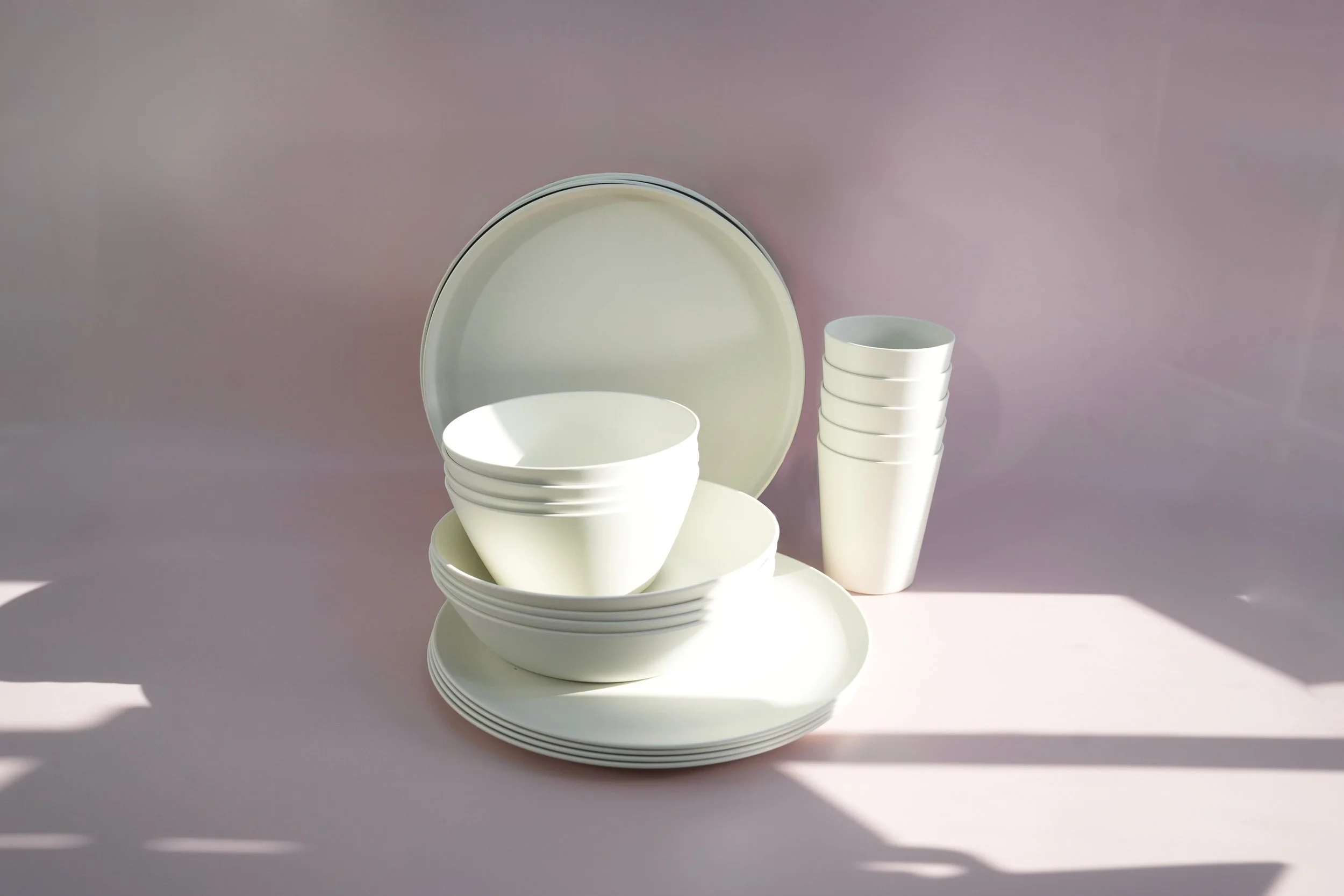
Our plant-based dinnerware is thoughtfully designed in soft, neutral tones to create a calmer, less distracting mealtime experience. By reducing visual clutter, children can more easily explore new foods, recognise colours and textures, and focus on eating rather than what's printed on the plate.
Lightweight and easy for little hands to carry, our dinnerware also encourages independence by allowing children to help set the table, carry their own plate, and take part in family mealtimes with confidence.
Expect the Mess
Independent eating is a skill, and like any skill, it takes practice.
Spills, dropped food, and sticky fingers are all part of the learning process. Instead of focusing on perfection, try viewing the mess as evidence that your child is learning.
The more opportunities children have to practise, the more coordinated and confident they become.
Offer Choices
Giving children small choices helps them feel involved and encourages independence.
Simple options such as:
Which vegetable to have with dinner
Which colour plate to use
Whether they'd like apple or pear slices
These small decisions can help children feel a sense of ownership over mealtimes without overwhelming them.
Let Them Listen to Their Bodies
Children are naturally good at regulating their food intake when given the opportunity.
Rather than encouraging children to finish everything on their plate, focus on creating a positive mealtime environment where they can learn to recognise when they're hungry and when they're full - no pressure! This is a hard one for us but we try to stick to it.
This helps build healthy eating habits that can last a lifetime.
Be Patient
Independent eating doesn't happen overnight.
Some days your child will happily feed themselves, and other days they'll ask for help. That's completely normal. Like most parenting journeys, progress isn't always linear.
The goal isn't perfectly clean meals or eating every bite. It's helping your child build confidence, develop skills, and enjoy food in a positive way.
Give Them More Responsibility at Mealtimes
One of the simplest ways to encourage independent eating is to involve children in the entire mealtime process—not just the eating itself.
When dinnerware is lightweight and easy for little hands to carry, children can begin taking on age-appropriate responsibilities such as setting the table, carrying their own plate to the table, helping clear dishes after meals, and serving themselves simple foods.
These small tasks help children build confidence, coordination, and a sense of ownership around mealtimes.
While it can be tempting to do everything for them, independence grows when children are given opportunities to practise. Rather than focusing solely on spoon-feeding, we can gradually teach children the skills they need to participate in family life and care for themselves.
The goal isn't perfection. There will be spills, crooked placemats, and the occasional dropped plate. But each small responsibility helps children develop confidence and capability.
Over time, these simple habits can transform mealtimes from something done for your child into something they actively participate in—building independence that extends far beyond the dinner table.
The Takeaway
Raising independent eaters starts with creating opportunities for children to practise, explore, and build confidence at the table.
With supportive guidance, realistic expectations, and child-friendly dinnerware, mealtimes can become less of a battle and more of a chance for your child to learn, grow, and thrive.
Because sometimes the little things—like carrying their own plate or taking their first confident bite—are the moments that help build independence for years to come.